
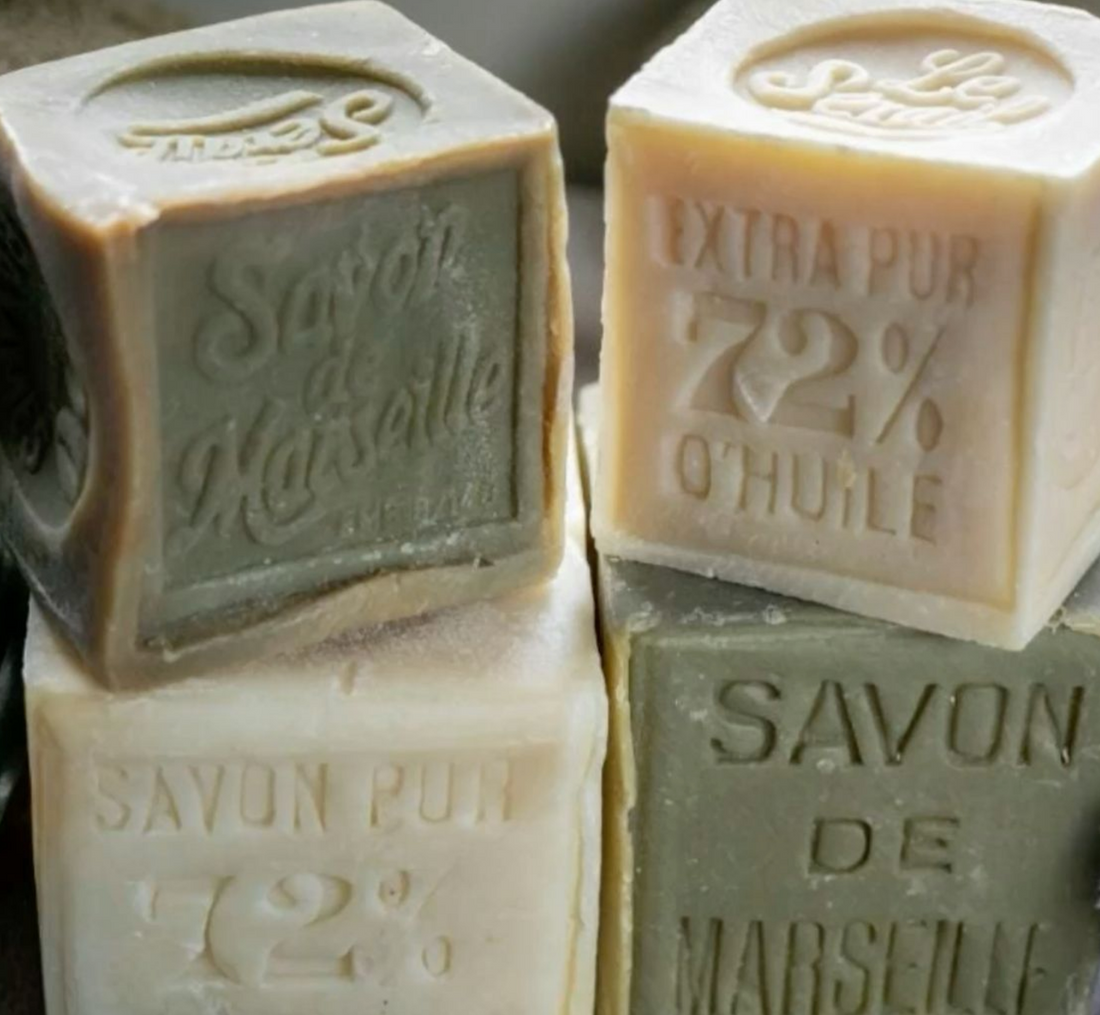
All you need to know about Marseille soap
Marseille soap, or Savon de Marseille, is a true legend in skincare. This natural soap originates from the beautiful French city of Marseille and has been cherished for hundreds of years for its gentle, effective, and eco-friendly properties. If you haven't tried it yet, it's high time to discover its many benefits – both for your skin and for the environment.
What is Marseille Soap?
Marseille soap is a traditional, solid soap made from natural ingredients such as olive oil, coconut oil, palm oil, and water. It has been made following the same recipe since the 17th century, and many classic brands still adhere to this ancient tradition. It is produced through a saponification process, where the oils are mixed with lye and then boiled in large kettles. The result is a mild and moisturizing soap known for its neutrality and versatility.
The Benefits of Marseille Soap
Natural Ingredients: Marseille soap is known for its pure and natural ingredients, making it ideal for people with sensitive skin. The olive oil often used in Marseille soap provides deep moisture to the skin without clogging pores, and it has anti-inflammatory properties that can soothe irritations and dryness.
Mild and Gentle: Thanks to its natural oils, Marseille soap is incredibly mild and can be used on both face and body. It cleanses without drying out the skin and is gentle enough for daily use. Many people use it to cleanse their skin, wash their hair, and even as a facial cleanser.
Versatility: Marseille soap is not just a beauty favorite – it can be used for everything from skin cleansing to washing clothes and cleaning the home. Many use it as a natural, eco-friendly way to wash clothes, and its antibacterial properties also make it ideal for cleaning surfaces.
Eco-friendly: Another great advantage of Marseille soap is its environmentally friendly production method. It is biodegradable and does not contain harmful chemicals that can negatively affect both the skin and nature. If you are looking to reduce plastic consumption, Marseille soap often comes in large blocks that can last a long time – reducing the need for multiple plastic bottles.
How to Use Marseille Soap
Marseille soap can be used in many different ways, and the best part is its versatility. Here are some tips on how to make the most of this natural soap:
As a facial cleanser: Wet your face with warm water, and rub the soap between your hands to create a soft lather. Gently massage the lather into your skin and rinse thoroughly with lukewarm water.
As a body soap: For soft and moisturized skin, use Marseille soap as a body wash in the shower. The gentle lather will cleanse your skin without drying it out.
As a hand soap: Cut a small piece of the soap and place it on a soap dish by the sink. It will keep your hands clean while nourishing your skin.
As a shampoo: Marseille soap can also be used as a natural alternative to shampoo. It gently cleanses the hair and adds shine without stripping it of natural oils.
What Makes Marseille Soap So Special?
Marseille soap stands out from other soaps on the market in several ways. It is made according to an old, traditional method, and the ingredients used are simple and natural. Authentic Marseille soap is made in Marseille, and it often carries a quality stamp confirming that it is produced according to the ancient rules.
Another reason why Marseille soap has stood the test of time is its ability to be so versatile. It can be used for almost anything, from skincare to cleaning, and it suits all skin types – even sensitive skin.
Marseille soap is a timeless classic that has been loved for generations, and it's easy to see why. It is natural, effective, and eco-friendly – a perfect choice for those who want to take care of both their skin and the planet. If you haven't tried this classic soap yet, it's time to experience the benefits for yourself.
So why not give your skin the care it deserves with a bar of authentic Marseille soap? Your skin will thank you!
